
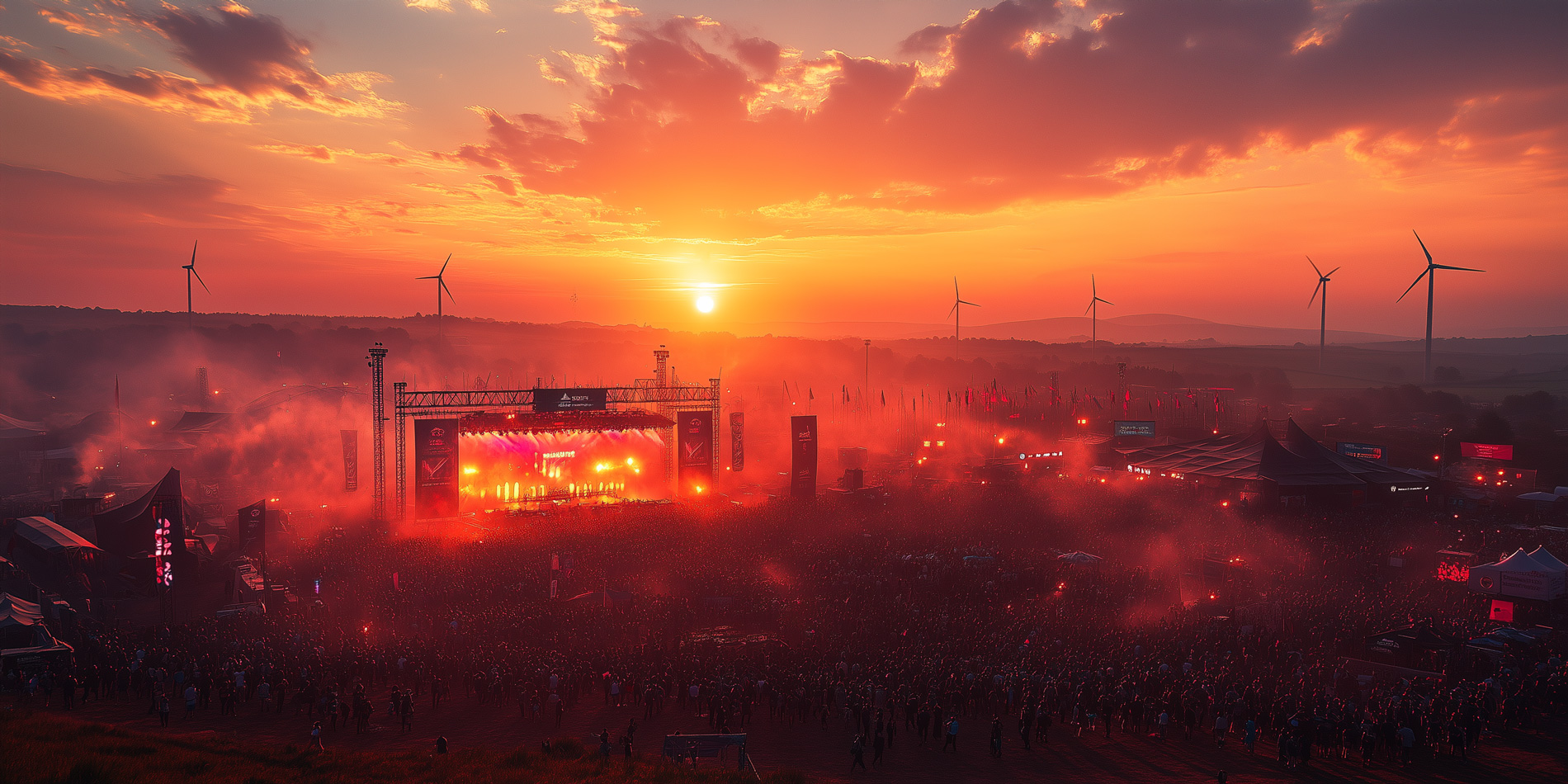
The electronic music industry thrives on live experiences: club nights, festivals and global tours that bring fans together under pulsating lights and beats. Yet, these events come with a significant environmental cost. From energy-intensive productions to the emissions associated with international DJ tours, the question arises: how can electronic music evolve to meet the demands of a more eco-conscious world?
For labels, rights holders and event organisers, sustainability is not just a trend but a vital challenge. As the industry grapples with its environmental footprint, a new wave of innovation is emerging, offering solutions that could redefine how electronic music tours and events operate.
The Carbon Cost of Electronic Music Tours
Touring DJs and electronic artists often travel extensively, hopping from continent to continent in a matter of days. The carbon footprint of these tours is staggering. International flights, energy-hungry sound systems and elaborate light shows are key contributors. For catalogue managers and rights holders, this raises important questions: how can we support greener touring models without compromising the essence of live electronic music?
Innovations in Sustainable Touring
Several UK-based brands, festivals and industry leaders are now pioneering efforts to make electronic music more sustainable.
1. Greener Festivals and Clubs
- Boomtown Fair (Hampshire) has been at the forefront of sustainability efforts, incorporating solar-powered stages, sustainable travel options and strict waste management initiatives.
- Glastonbury Festival has significantly reduced its environmental footprint, banning single-use plastics and encouraging artists and fans to use sustainable transport options.
- Fabric London has implemented energy-efficient systems within the club and is actively involved in sustainability conversations within the UK's electronic music scene.
2. Sustainable Travel Initiatives
- Ecostage, a UK platform, helps artists and events assess and reduce their carbon footprint. Some UK-based electronic artists are committing to slower touring schedules, choosing trains over flights where possible.
- DJ and producer Midland has publicly spoken about reducing his flights and considering carbon offset initiatives as a responsibility for touring artists.
- Massive Attack commissioned a major study with the Tyndall Centre for Climate Change Research to explore how live music touring can be restructured for sustainability.
3. Energy-Efficient Sound and Lighting
- Glasgow's SWG3 nightclub introduced the revolutionary 'Bodyheat' system, which captures heat from dancing clubgoers and repurposes it to power the venue.
- Ministry of Sound in London has introduced LED lighting and energy-efficient sound systems to reduce its environmental impact.
- Pioneer DJ and UK-based Funktion-One continue to innovate, designing more energy-efficient sound systems that deliver high-quality audio with lower power consumption.
4. Digital Alternatives and Virtual Events
- Beatport and Boiler Room have expanded their digital event offerings, allowing fans to experience high-quality performances without travel emissions.
- United We Stream, which originated in the UK and Europe during the pandemic, proved that live-streamed clubbing experiences could attract massive audiences while being more environmentally friendly.
- Some UK-based promoters are experimenting with hybrid events, offering both in-person and digital experiences to reduce the environmental footprint of international travel.
A Collective Effort
Sustainability in electronic music is not a solo effort. It requires collaboration from labels, promoters, DJs, fans and venues. The industry is already making strides, but the challenge remains: how do we scale up these efforts while maintaining the essence of live music culture?
From UK festivals adopting green initiatives to clubs pioneering energy-efficient technologies, the movement toward sustainable electronic music is gaining momentum. As the industry continues to innovate, one thing is clear: sustainability is not just an option, it is the future of electronic music.